
Inside the South Carolina Most Wanted Program
South Carolina's most-wanted program belongs to one agency. The Department of Probation, Parole and Pardon Services (SCDPPPS) runs a “Most Wanted Offenders” page aimed at people who have absconded from supervision. Parole and probation cases are its whole scope. Every active warrant from a South Carolina court is not the goal. The page offers program details plus a confidential tip channel. No coverage promise appears. No total count or fixed update schedule does either. Entries may carry supervision status, county, original offense, and general physical-description categories, all meant to help the agency gather information. None of that makes the roster a statewide warrant search, and it can change at any time. To check a personal case, contact the issuing court and the agency serving the warrant instead of treating the list as a status lookup.
SCDPPPS Most Wanted Offenders
Official supervision-absconder program information and a confidential tip route. The roster is not reproduced here.
The official SCDPPPS page gives its own current instructions. Do not assume a reward amount, a complete warrant count, or a status date that the page does not state.
Use the page only for its program purpose. A listing does not tell a reader whether a separate municipal, magistrate, or General Sessions warrant exists.
The image below shows only the title and tip guidance from the official SCDPPPS page; it excludes roster entries and individual photos.
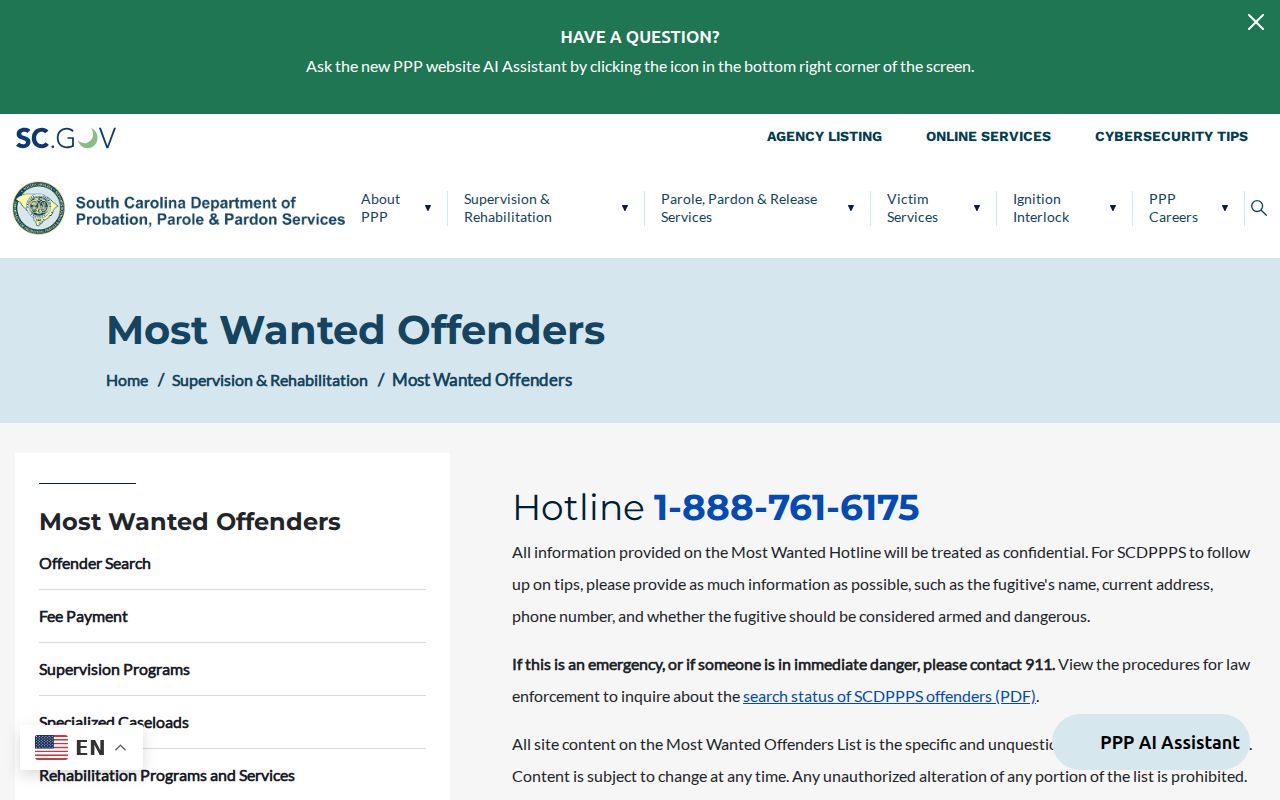
That focus keeps South Carolina's program page on how the program works rather than republishing live person records.
South Carolina Fugitive Warrants Have Separate Channels
Other fugitive programs in South Carolina play narrower roles. The Department of Corrections (SCDC) Fugitive Apprehension Unit chases leads on people who escaped state custody. That mission differs from SCDPPPS supervision absconders. It also differs from local court warrants. SCDC's inmate search even warns that fugitives are excluded from it. SLED coordinates a Blue Alert when statutory criteria are met. The trigger is a qualifying threat involving law enforcement and a wanted subject entered in NCIC. An alert pushes public information and tips to authorities; it is not a searchable roster. Neither the SCDC unit nor a Blue Alert page amounts to a complete list of South Carolina warrants.
SCDC Criminal Investigations
Fugitive apprehension for escaped inmates; this is a corrections program, not a general court-warrant index.
Tip line: 877-349-2130
SLED Blue Alert
State alert criteria and public guidance for a qualifying law-enforcement threat.
24-hour line: 803-896-7133
The official SLED Blue Alert page explains the alert program itself. South Carolina's guidance for public response sits there too.
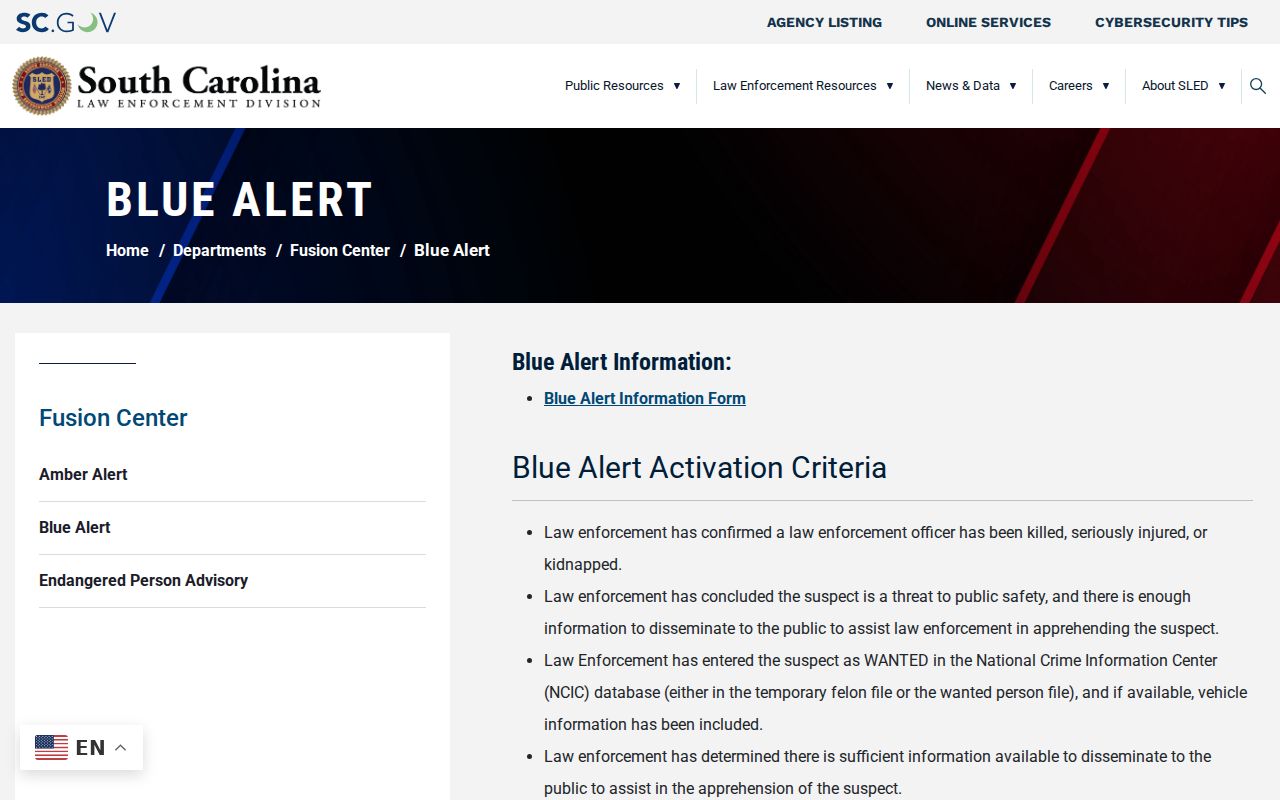
Alerts are not court confirmation for a warrant. A local warrant can exist without appearing in any focused program. For a personal South Carolina warrant question, the issuing clerk and serving agency remain the proper sources.
South Carolina Statewide and County Most-Wanted Lists
The statewide SCDPPPS page and a county sheriff's local page share no roster or coverage rule in South Carolina. SCDPPPS tracks absconders from its supervision caseload. Sheriff pages are local material. Where a county posts one, the cases may differ. Some county routes end at a warrant search or contact page rather than a most-wanted list at all.
| Feature | Statewide List | County List |
|---|---|---|
| Run By | SCDPPPS, for its supervision absconder program | County sheriff, if a local list is published |
| Who Is Included | A curated parole and probation supervision subset | Local agency selection and scope vary |
| Tip Route | Program-specific confidential hotline | Use the agency's stated local contact |
| Where to Start | Official SCDPPPS program page | Open the county route in the county directory |
Open the South Carolina county you need in the county directory to find its sheriff and court routes. Confirm a list actually exists first. The directory itself is not a warrant database.
No South Carolina Warrant List Update Promise
The South Carolina SCDPPPS page makes no claim to hold every wanted person or every warrant. No total appears. No date range or update cadence appears either. Sheriff pages face the same limits. Each agency publishes only the records it holds and releases. South Carolina sets no statewide participation rule or refresh schedule for sheriffs. A live roster can change after a tip, a capture, a supervision action, or an agency review. Missing entries prove nothing. Without a stated timestamp and coverage rule, an absent name doesn't mean the warrant has ended. A visible entry doesn't fix the current terms or bond either. Treat any listing as a lead. Then take the case to its issuing court and serving agency. The county and city court route still applies. Even a live state program page doesn't replace it. Link the official South Carolina program rather than copying or reposting its records. The SCDPPPS page itself carries the current agency instructions.
Note: With no posted update schedule, an absent name can't be read as a change in court status.
South Carolina Blue Alerts Use NCIC Status
South Carolina's Blue Alert exists for one narrow job: broadcasting a qualifying threat against law enforcement by a wanted subject already entered in NCIC. SLED coordinates the state program under S.C. Code §23-3-1400, which sits within South Carolina Code Title 23, Chapter 3. The channel moves urgent public information fast. It is not a warrant roster, though. No feed of every South Carolina court warrant lives there. When an alert is active, follow the official safety directions. Never approach or try to detain anyone. Call 911 about immediate danger. A question about a specific warrant goes instead to the issuing court and the agency responsible for service, because an alert page cannot confirm whether that court has recalled or served a separate warrant. Note: The Blue Alert program broadcasts a qualifying event; it does not maintain a public roster of every South Carolina warrant.
Reporting a Tip Safely
South Carolina tip channels each belong to a specific agency program. SCDPPPS lists 1-888-761-6175 for supervision absconder tips and treats the information as confidential. SCDC runs a separate Fugitive Apprehension Unit route for reports about escaped inmates. None of these lines can confirm your own court case.
- Read the official program's current tip instructions and use its listed telephone or submission channel.
- Share only what you know directly, such as a location or time, and let trained officers assess it.
- Do not approach, follow, detain, or post a person's identity or location online.
- Call 911 for immediate danger or an emergency in progress, rather than using a routine tip form.
Key point: Send a tip to the official agency channel, keep a safe distance, and leave contact or arrest decisions to law enforcement.
South Carolina Most-Wanted Tips Stay With Agencies
Tip programs serve the agency that runs them. They are not an invitation to investigate anyone yourself. South Carolina's SCDPPPS line is confidential and points emergencies to 911. SCDC's escape-fugitive channel answers a different question than a local court warrant check. SLED's Blue Alert guidance covers one defined urgent situation. Sending a routine tip to the wrong program does nothing for a court matter. Your own case, or a relative's, belongs with the issuing clerk. A lawyer can help there. Immediate threats go to 911. Other program questions follow the official page's current directions. The SCDC Criminal Investigations page lists the fugitive unit's contacts, including a tip number and an agency line. The official SCDC page explains that the channel concerns escaped inmates. It publishes no all-court warrant search. SLED's Blue Alert information likewise explains when an alert is issued and how to respond safely. A statewide alert never replaces ordinary court or sheriff confirmation. Note: A routine court-status question belongs with the issuing clerk, not with a fugitive tip line.
How Most Wanted Differs From an Active Warrant
A most-wanted page and an active warrant are different things. One is a curated agency program. The other is court process that can sit quietly with no publicity at all. SCDPPPS posts supervision absconders from its own program. A bench or arrest warrant out of a Magistrate, Municipal, Family, or General Sessions court may never touch that list. So absence from a most-wanted page proves nothing about South Carolina warrants. A listing gives no full case terms either. Bond conditions and recall status stay with the court. For the broader distinction and a local search route, see outstanding warrants; real confirmation comes from the issuing court and the serving agency. Treat the state and county programs as leads to official agencies, not complete warrant registers. For a local route, open the court and sheriff information in the county directory.
South Carolina Fugitive Task Force Works Regionally
The U.S. Marshals Service leads the Carolinas Regional Fugitive Task Force. It coordinates federal, state, and local partners across North and South Carolina. USMS says the task force began in January 2018. A 2024 release reported more than 8,900 arrests since its start region-wide, along with partnerships with more than 70 agencies. Those are two-state figures. They are not a count of South Carolina warrants. The task force handles fugitive investigations across jurisdictions. It is not a public roster. It is not a clerk's office for checking whether a local warrant is active. Coordination may help the agencies involved, but the issuing court remains the source for a South Carolina case's current status. The USMS task-force page describes that regional role. Read its releases for program context only. An interstate question about a personal warrant calls for counsel and official channels in the jurisdiction that issued the process. A South Carolina county route cannot resolve a federal docket. Nor can it touch another state's court order. Note: Regional arrest totals describe joint work across two states and cannot be counted as South Carolina warrants.
When You Think You Are on a List
Suspecting that you or a family member appears on a South Carolina fugitive page calls for verification, not panic. Skip the copied results and secondhand posts. Open the agency's own page, then talk with a criminal-defense lawyer about confirming the court record and arranging a safe appearance. A lawyer can pin down the issuing court, explain bond or no-bond conditions, and coordinate a controlled next step rather than an unexpected arrest. For a county case, the county directory points you to the Clerk of Court, Magistrate Court, sheriff, or municipal route. City ordinance and traffic matters may sit with a Municipal Court and city police instead of the county sheriff. Federal cases go through counsel and the federal court or U.S. Marshals office tied to that matter. One caution: a most-wanted page is never the whole record, and paying a fee online does not automatically recall an active warrant. Ask the issuing court directly what action it recorded, whether the outstanding warrant was recalled, and whether the service agency got notice.
Important: If you may be subject to a warrant, consult a lawyer and verify the issuing court's instructions before appearing or making a payment.
South Carolina has no universal surrender counter and no statewide recall form. The court's own order controls what happens next.