
South Carolina Municipal Court Warrants Explained
South Carolina Municipal Courts handle city-ordinance cases and qualifying state-law summary offenses, including traffic. Miss a court date or ignore an order, and bench-warrant process may follow. The issuing city court decides, keeps its own docket, and directs any recall. There is no single statewide municipal-warrant counter, and city police or another officer may receive the process for service. Municipal Courts sit beside county Magistrate Courts and Circuit Court. They are not branches of a sheriff's office. The right clerk depends on which court set the date. Confirm the warrant with the city court that issued it. County tools can help you locate the route, but they never replace city-court confirmation.
South Carolina Municipal Court Scale
Municipal authority is local, but the tier is widespread: the Judicial Branch describes courts in about 200 South Carolina municipalities. Municipal judges hold criminal powers similar to magistrates within their jurisdiction, covering city ordinances and qualifying summary cases, though the tier has no civil jurisdiction. That figure is approximate, and it counts municipalities with courts, not warrant offices or online search systems. A city citation may not appear on a county sheriff's page, since each municipal clerk keeps that court's case information and city police may handle local process. Read the state's Municipal Court description to understand the tier. Then use city and county routes to find the clerk for a specific case. Note: The approximate count describes municipalities with courts, not a verified count of public warrant-search systems.
Municipal and County Warrants Compared
"County warrant" can point to different court levels in South Carolina. A county Magistrate Court takes summary criminal and traffic matters, while Circuit Court's General Sessions docket handles felonies. Municipal Court covers city ordinances and qualifying summary matters. The issuing court and the case type tell you who keeps the record, because South Carolina has no one county office for every lower-court warrant.
| Feature | Municipal Court Warrant | County Warrant |
|---|---|---|
| Issuing court | Municipal Court for a city matter | Magistrate Court for county summary cases, or General Sessions in Circuit Court for a felony case |
| Record keeper | Municipal Court clerk and city records system | Magistrate clerk or county Clerk of Court, based on the court |
| Common service route | City police; some warrants use a statutory route beyond city limits | Sheriff or other authorized peace officer |
| Search coverage | Some municipal cases appear in Public Index; participation is partial | Public Index and sheriff information vary; neither is a statewide warrant certificate |
South Carolina City Warrant Search Gaps
The Trial Court Public Index is a case tool, not a full warrant register. Current help lists participating municipal courts, and other cities keep cases in local systems. A case entry does not prove a warrant is active, recalled, or served. An empty result cannot rule out a city warrant. A county sheriff's search has its own limit. It may show warrants reported to that office, while a municipal court and city police hold separate records. The Judicial Branch Public Index help describes case-search coverage, not warrant coverage. The South Carolina Municipal Court tier handles its own city matters, so contact the clerk when an online case is missing. Note: A case listing may help identify a court, but the municipal clerk is the source for that court's warrant status.
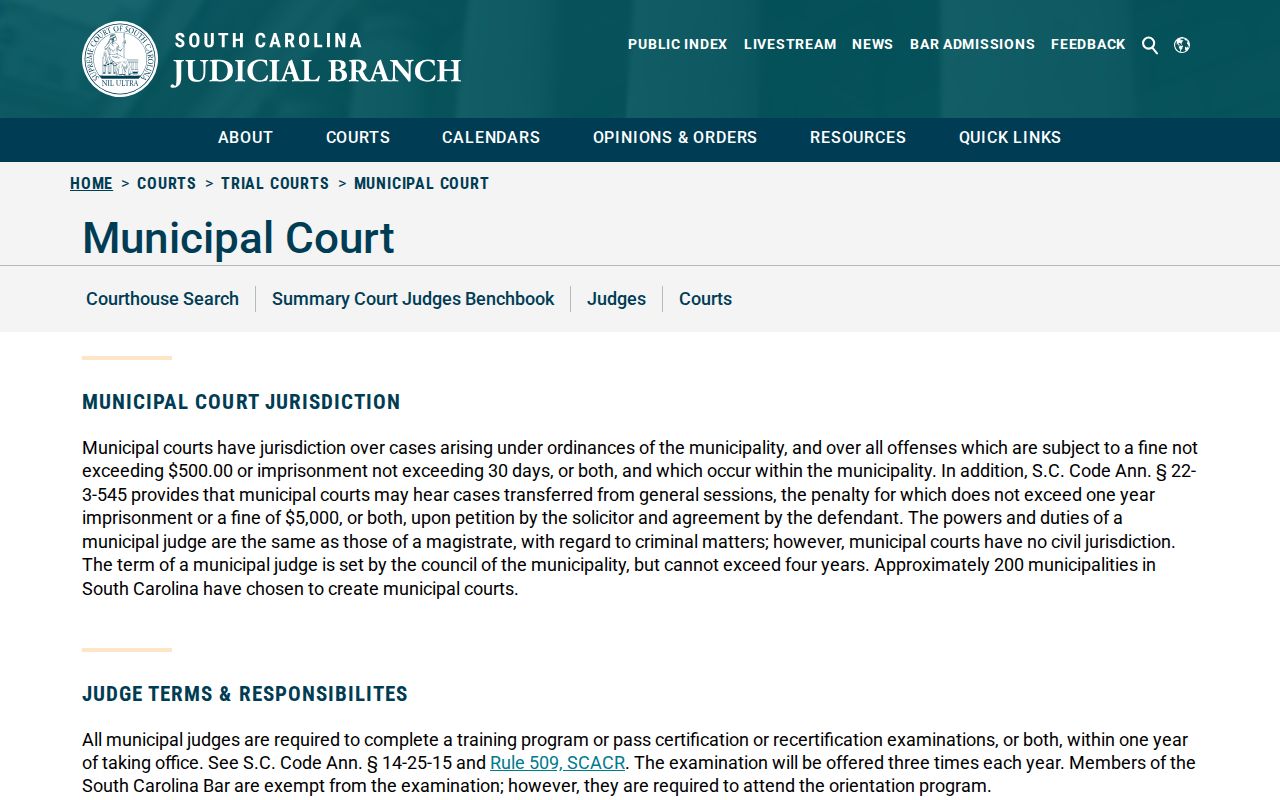
South Carolina's court page explains the municipal tier. The clerk confirms the docket.
Checking a South Carolina Municipal Warrant
Start with the city and the citation or court date, then identify the Municipal Court that handled it. A Public Index result can point to a case, but it does not prove warrant status, and some municipal courts do not participate. The statewide Court Roster Search routes by county, city, or ZIP to court contacts and record links.
- Gather the ticket or notice. Note the name used in court, hearing date, case number, city, and county.
- Use the Public Index as a case lead if the city participates. Then verify status with the municipal clerk.
- Open the relevant county in the South Carolina county directory for court and sheriff routes. A city case also requires the city clerk or police.
- Ask the clerk about recall, appearance, payment, and bond. Do this before paying or arranging a voluntary appearance.
- If the case is not online, contact the city clerk or police. Ask which office can confirm service and status.
The city court keeps its case and decides what clears its warrant. In South Carolina, the county Magistrate Court, Clerk of Court, and sheriff handle separate county matters and service routes.
South Carolina Municipal Portal Paths
Municipal court websites often separate case information from payments, and the City of Sumter Municipal Court page shows the pattern: a case-information link to Sumter Public Index, plus distinct payment links for traffic, criminal, and warrant matters. Each link serves a different task. The distinction matters after an online payment. A receipt shows a transaction occurred. Warrant recall is a court action the issuing court must record, so contact the municipal clerk to confirm what remains, including another appearance or order. The Sumter court page keeps case and payment links separate, and Sumter shows one city's routing, not a statewide portal or a rule for other cities. Confirm any warrant with the issuing court.
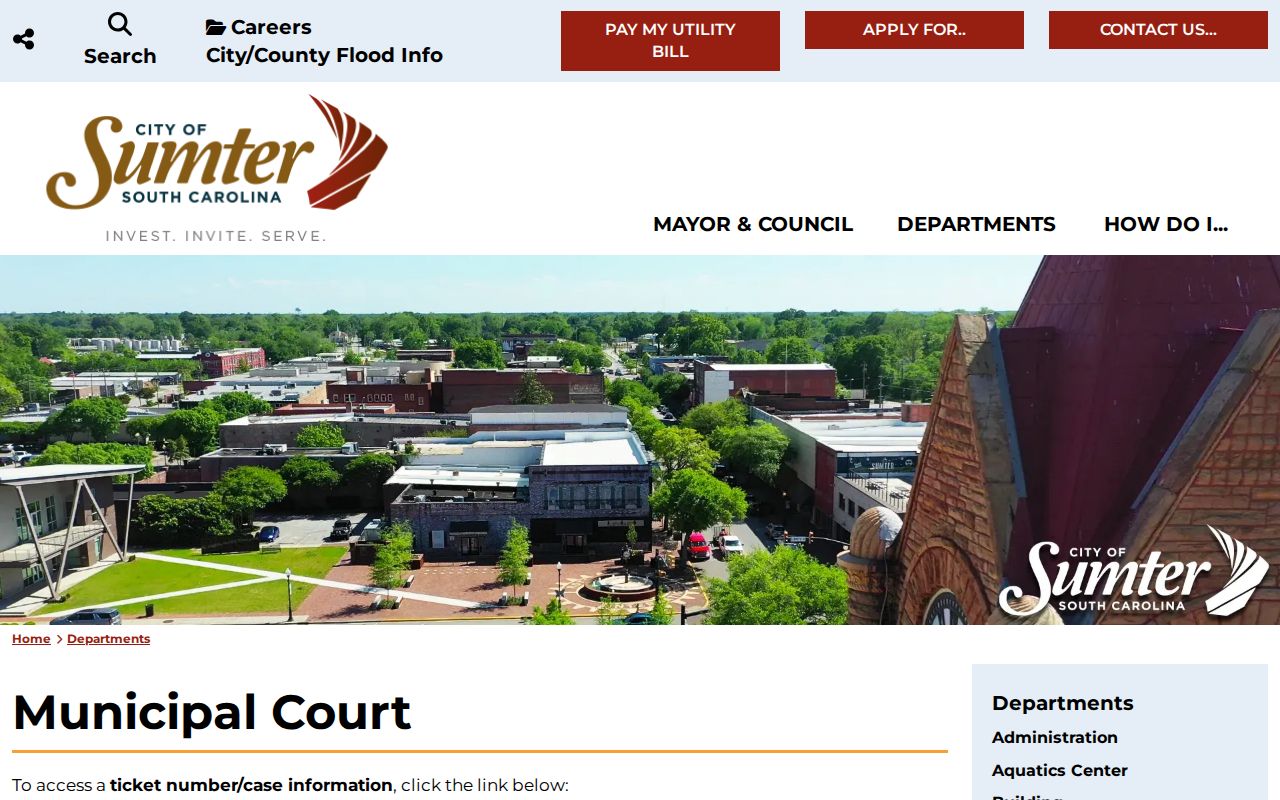
For a South Carolina municipal warrant, use the city's instructions and request confirmation after a payment or appearance. Note: Sumter's page illustrates one municipal routing pattern; other South Carolina cities may use different links and procedures.
Inside a South Carolina Municipal Warrant
South Carolina keeps no uniform public screen for municipal warrants, and no statewide field list exists. What you get depends on the city court's record. A docket may carry the case number and the person named. It may also show the missed date, the reason for issuance, prior bond, the judge, and the service return. Ask the clerk which details the court can release and what status was entered. One caution: a case number is not a statewide warrant-number format.
| Case reference | The court's case number, such as the case number shown on its notice; formats vary by court. |
|---|---|
| Person named | The person the court orders brought before it, matched against the case file. |
| Charge or matter | The city ordinance or qualifying summary offense tied to the municipal docket. |
| Issuing court | The Municipal Court and municipality responsible for the case and any recall. |
| Appearance and bond | The missed date or reason for process and any prior bond terms recorded by the court. |
| Service and return | Where available, the officer's service date or return reason; this may not be public online. |
What a city docket shows can differ from what the next city shows. South Carolina municipal courts format their own warrant entries, so the fields open to the public vary by city. Confirm which court issued the warrant and its current recorded status. A partial result is not the full file. Note: A partial docket view can omit service or recall details, so ask the court what its record shows today.
South Carolina Municipal Warrants Across City Lines
A municipal warrant stays municipal even when officers serve it beyond the city limits. It does not convert into a county warrant. Under S.C. Code Title 22, Chapter 5, §22-5-190, South Carolina gives certain municipal arrest warrants a defined path outside the city. A magistrate in the district where the person is found may endorse the warrant. The statute then directs how it is executed and returned. The issuing municipality stays in the chain the whole way. For city process, call the issuing Municipal Court clerk or the city police. Ask whether the warrant was sent out for service and which office holds the return. County Magistrate Court and the sheriff take part when the statute routes service through them. Keep the scope in mind. This route is narrow. It does not place every city warrant in a county database, and no single department runs all municipal cases.
How to Resolve a South Carolina Municipal Warrant
Resolving a municipal warrant starts with the city court that issued it. Call that court first. The judge may direct an appearance, take payment, allow a payment arrangement, or set bond. A recall can take a motion or an order. South Carolina has no statewide recall form, no set fee, no walk-in rule, and no automatic reset. Ask the municipal clerk how the judge handles the case, and whether counsel should arrange the appearance.
- Confirm status, case number, issuing court, and any bond terms with the clerk.
- Ask whether the judge requires a motion, hearing, set appearance, or another recall step.
- Resolve the ticket or ordinance case through the court's approved payment or hearing path.
- Ask the court to confirm recall. Ask whether it notified city police, the sheriff, or another serving agency.
- Keep the receipt and case details. Recheck with the municipal clerk if status is unclear.
Bond terms rest with the judge and the case. Blank South Carolina forms list cash, cash percentage up to 10%, and surety. The court form sets no universal amount and names no payment location. So ask the city clerk what bond applies. Ask where the court accepts it, and which payment methods it takes. Posting bond may secure release, but it does not dismiss the charge or cancel the next court date.
Caution: Paying a municipal ticket does not by itself prove that the issuing court recalled a warrant or updated the serving agency.
South Carolina Municipal FOIA Timing
When the online view falls short, a written request under the South Carolina Freedom of Information Act can seek releasable records. Send it to the city or public body holding the warrant, return, or case file. Name the municipality. Add the case number or date if you have one. Describe the exact record you want. FOIA is a records route, though, not a same-day status desk. A public body generally has 10 business days to decide, or 20 for records over 24 months old. Approved records are generally due within 30 calendar days, or 35 for older records. Exemptions may permit redaction or withholding, and protected law-enforcement and confidential information can be affected. For an immediate status question, call the clerk and the serving agency. Save FOIA for records those offices can lawfully release.